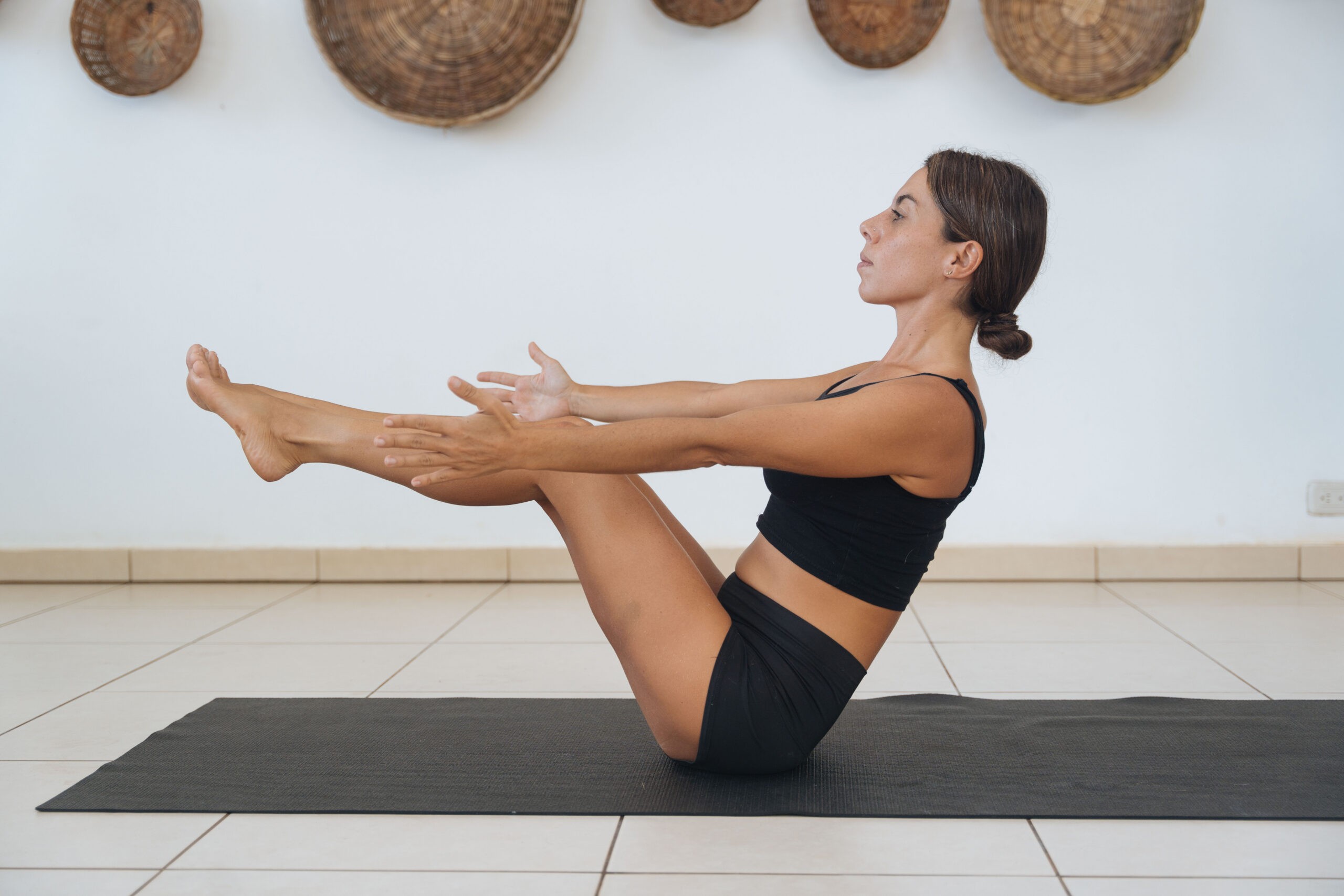
Anyone who has rolled out a mat right after a big breakfast knows the feeling. Twists feel cramped, forward folds press in the wrong places, and attention keeps drifting toward the stomach instead of the breath. Digestion and yoga share more ground than most people expect. How you spend the first part of your morning, and how you time your practice around food, shapes how comfortable both feel.
This guide walks through a simple approach built on timing, breath, a handful of gentle postures, water and an unhurried breakfast. None of it needs to be done perfectly, and all of it can flex around a busy schedule.
Why does practicing on a full stomach feel off?
Practicing on a full stomach feels off because so many postures compress, twist or fold the midsection while the body is still busy with a recent meal. Seated twists, deep forward folds, bow pose and bridge all ask the abdomen to bend or stretch, and a full stomach leaves little room for that. The breath tends to shorten as well, since the diaphragm has less space to move, and a shallow breath makes it harder to settle.
Bloating adds another layer. Feeling puffy does not mean you are doing anything wrong, but it changes how a posture feels from the inside. Paying attention to what you eat, how quickly you eat it and when you step onto the mat gives you far more control than any single trick.
How long should you wait between eating and practicing?
There is no single rule, but many teachers suggest leaving a gap of a couple of hours after a substantial meal before an active or heated class, and less after a light snack. A gentle, restorative practice usually sits more comfortably closer to a meal than a vigorous flow with lots of inversions and twists.
A few practical guidelines help:
- Before an early class, keep it light: a piece of fruit, a small yogurt or a few spoonfuls of oats.
- Save the larger breakfast for after practice, when the body is warm and the mind is settled.
- If you practice in the evening, a lighter lunch and an early, modest afternoon snack keep the stomach quiet.
- Notice how your own body responds over a week or two. Your best gap may be shorter or longer than anyone else’s.
Which postures are kindest to digestion?
The kindest postures for digestion are slow, supported shapes that let the belly soften rather than crunch. These are not cures for anything. They simply give the midsection room to move and the nervous system a cue to slow down.
1. Cat-cow
How to do it: On hands and knees, move slowly between arching and rounding the spine with the breath
Why it suits a sensitive stomach: Gently mobilizes the torso without compressing it
2. Supine Twist
How to do it: Lying on the back, draw one knee across the body and let it rest, then switch sides
Why it suits a sensitive stomach: A soft twist with the floor taking the weight
3. Wind-Relieving Pose
How to do it: Lying on the back, hug one knee or both knees toward the chest
Why it suits a sensitive stomach: Light pressure on the abdomen, easy to ease off
4. Child’s pose
How to do it: Knees wide, hips toward the heels, forehead resting down
Why it suits a sensitive stomach: Lets the belly drop between the thighs instead of folding against them
5. Legs up the wall
How to do it: Lying near a wall with the legs resting up it
Why it suits a sensitive stomach: A quiet, restful finish that asks nothing of the stomach
Move slowly, keep the breath easy, and back off anything that feels like squeezing. If a twist or fold presses uncomfortably, widen the knees, use a bolster or skip it for the day.
What role does the breath play?
The breath is the bridge between the posture and the nervous system. Slow, comfortable breathing through the nose, with the belly allowed to rise and fall, tends to help people feel calmer and less tense through the middle. That matters because many of us hold tension in the abdomen without noticing.
Try a few minutes before you move or before you eat. Sit comfortably, rest one hand on the belly and let the exhale run a little longer than the inhale. There is nothing to achieve. The aim is simply to arrive, so the meal or the practice that follows starts from a quieter place.
What belongs on an unhurried breakfast plate?
A breakfast that sits comfortably usually leans on simple, familiar foods in modest portions, with fiber coming from whole sources. Some easy building blocks:
- Cooked oats or another soft whole grain, topped with fruit
- Berries, pear or banana for gentle, familiar fiber
- Chia or ground flax stirred into oats or yogurt
- Eggs, yogurt or tofu for a little protein
- Ginger or peppermint tea on the side, if you enjoy it
Fiber deserves a gentle hand. If your usual breakfast has very little of it, add one source at a time, since a sudden jump can leave some people more bloated rather than less. Chewing slowly, putting the fork down between bites and sitting rather than eating on the move all help the meal feel calmer. Mindful eating is really the same skill yoga teaches: paying attention, without judgment, to what is happening right now.
Where do supplements fit, if at all?
For most people, the habits above do the heavy lifting, and a supplement is an optional extra rather than a requirement. Some people who deal with occasional bloating after big meals add a daily digestive support capsule, taken with water after the largest meal of the day, which keeps it well away from the pre-practice window. Ellekay makes one. Whatever you choose, introduce one change at a time so you can tell what actually helps, and check with a doctor or pharmacist first if you are pregnant, nursing, taking medication or managing a health condition.
How will you know the routine suits you?
You will know it suits you when your body feels comfortable and your attention stays on the mat instead of on your stomach. Keep brief notes for a week or two: what you ate, how long you waited before practicing and which postures felt crowded. Patterns tend to show up quickly, and they are more useful than any rule handed down from outside. If something keeps feeling off, a registered dietitian or doctor can help you work out why.
A quieter way to begin
A good yoga morning rarely needs more than a few slow breaths, a handful of gentle postures, a glass of water and a breakfast you actually sit down for. Timing, patience and a little attention do most of the work. Start with whichever step feels easiest, and let the rest follow when it is ready.